How Generative Artificial Intelligence Supports Human Application in Brand Visual Identity Design
Keywords:
Generative Artificial Intelligence; Brand Visual Identity; Human-AI Collaboration; Design Process; Creative Generation; Empirical StudyAbstract
Abstract
Generative Artificial Intelligence (Generative AI, GenAI), as a powerful set of technologies capable of generating new information across multiple modalities including text, images, audio, and video, is permeating and reshaping various creative industries at an unprecedented pace. In the field of brand design, GenAI has attracted significant attention due to its immense potential to accelerate creative iteration and expand the design space. However, empirical research on the specific division of roles, collaboration patterns, and the impact on design outcomes between human designers and GenAI in the Brand Visual Identity (BVI) design process remains relatively scarce, leaving a notable research gap for understanding human-AI collaboration mechanisms and optimizing future design support systems.
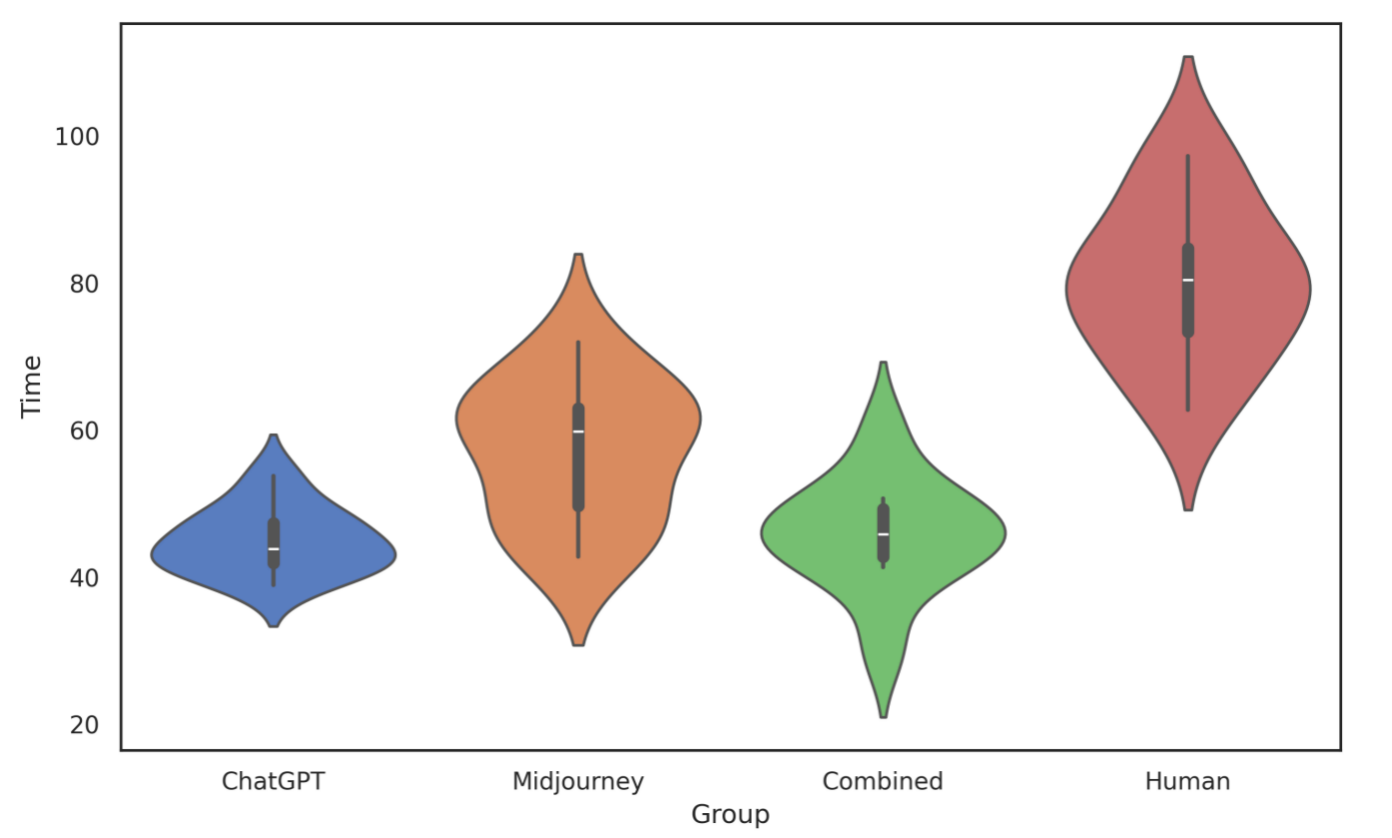
To address this gap, this study aims to systematically examine the specific contributions of different GenAI technologies—text-generative (e.g., ChatGPT) and image-generative (e.g., Midjourney)—in supporting humans throughout the BVI design process through a rigorously controlled experiment. Twenty junior designers with comparable design backgrounds were recruited as participants and randomly assigned to four experimental conditions, with or without GenAI assistance: the ChatGPT group, the Midjourney group, the hybrid group, and the human-only group. Participants completed two representative brand design tasks.
The results reveal that GenAI provides significant support to human designers primarily during the Brand Core Value Definition and Visual Element Generation stages, greatly enhancing efficiency and creative diversity in these phases. However, stages requiring high contextual understanding and aesthetic judgment, such as Consistency Evaluation and final solution decision-making, remain predominantly human-led. Notably, with GenAI assistance, the selection and evaluation of design solutions are further strengthened and optimized, resulting in higher design quality and improved brand consistency.
Based on these empirical findings, this study discusses the role positioning, complementary advantages, and potential challenges of GenAI in human-AI collaboration for brand design. It further provides practical recommendations and theoretical insights for leveraging GenAI to construct more efficient and intelligent brand visual design support systems in the future.
Keywords: Generative Artificial Intelligence; Brand Visual Identity; Human-AI Collaboration; Design Process; Creative Generation; Empirical Study