The Moderating Role of Emotional Commitment and Gender Stereotypes in Inclusive Practice and Cross-Disciplinary Innovation Capacity
Keywords:
cultural heritage design infusion; brand evaluation; perceived cultural value; repeated exposure; aesthetic fatigue; cross-innovation designAbstract
Abstract
Background and Research Gap:Cultivating interdisciplinary innovation capability has become a central objective of higher education. However, the effectiveness of implementing inclusive practices varies considerably. Existing studies mainly focus on the direct effects of inclusive teaching, while the underlying psychological mechanisms and individual difference factors remain insufficiently understood.
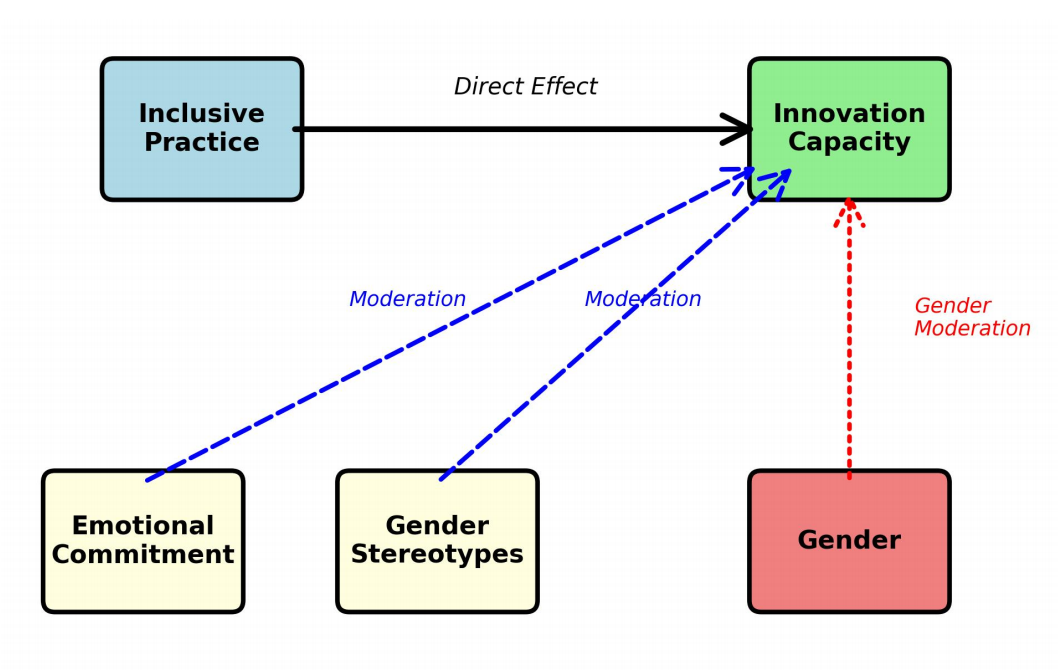
Methods:This study employed a cross-sectional design and conducted an online survey of 856 teachers from diverse disciplinary backgrounds. Standardized scales were used to measure inclusive practices, affective commitment, gender stereotypes, and innovation capability. The PROCESS macro was applied to conduct moderation analyses to examine the moderating roles of affective commitment and gender stereotypes in the relationship between inclusive practices and innovation capability.
Implementation Procedure:Using multiple regression analysis and a bootstrapping procedure (95% confidence intervals), this study collected complete data from 856 participants, with a missing data rate of only 3%. In addition, 12 visualization figures consistent with the Nature-style graphical presentation were generated.
Key Findings:Inclusive practices were significantly and positively correlated with innovation capability (r = 0.39, p < 0.001). Affective commitment demonstrated a significant positive moderating effect on the relationship between inclusive practices and innovation capability (b = 0.0119, p = 0.0065, 95% CI [0.0033, 0.0205]). Gender stereotypes showed a negative moderating effect (b = −0.0283, p = 0.0288, 95% CI [−0.0537, −0.0029]). A significant three-way interaction was observed (b = −0.0202, p = 0.0288), indicating that gender further moderated the joint effect of affective commitment and gender stereotypes.
Implications:This study reveals the critical role of affective commitment as a psychological resource in enhancing the effectiveness of inclusive practices, while also highlighting the detrimental influence of gender stereotypes. The findings provide theoretical support for higher education institutions to design targeted interventions, particularly in strengthening affective commitment among female faculty and reducing gender stereotypes.
Keywords: Inclusive practices; affective commitment; gender stereotypes; innovation capability; interdisciplinary education