Generative Artificial Intelligence for Digital Preservation and Innovative Design of Cultural Heritage: A Mixed-Methods Review
Abstract
Abstract
Background and Gaps: The digital preservation and innovative design of cultural heritage play a crucial role in the transmission of human civilization. However, traditional digital approaches often face bottlenecks such as high data acquisition costs, insufficient reconstruction accuracy, and low efficiency in creative transformation, making it challenging to meet the demands of large-scale cultural heritage protection and public interactive experiences. Existing studies are largely confined to the application of single technologies and lack a systematic evaluation of AI-enabled cultural heritage across its full lifecycle from a design-driven cross-innovation perspective.
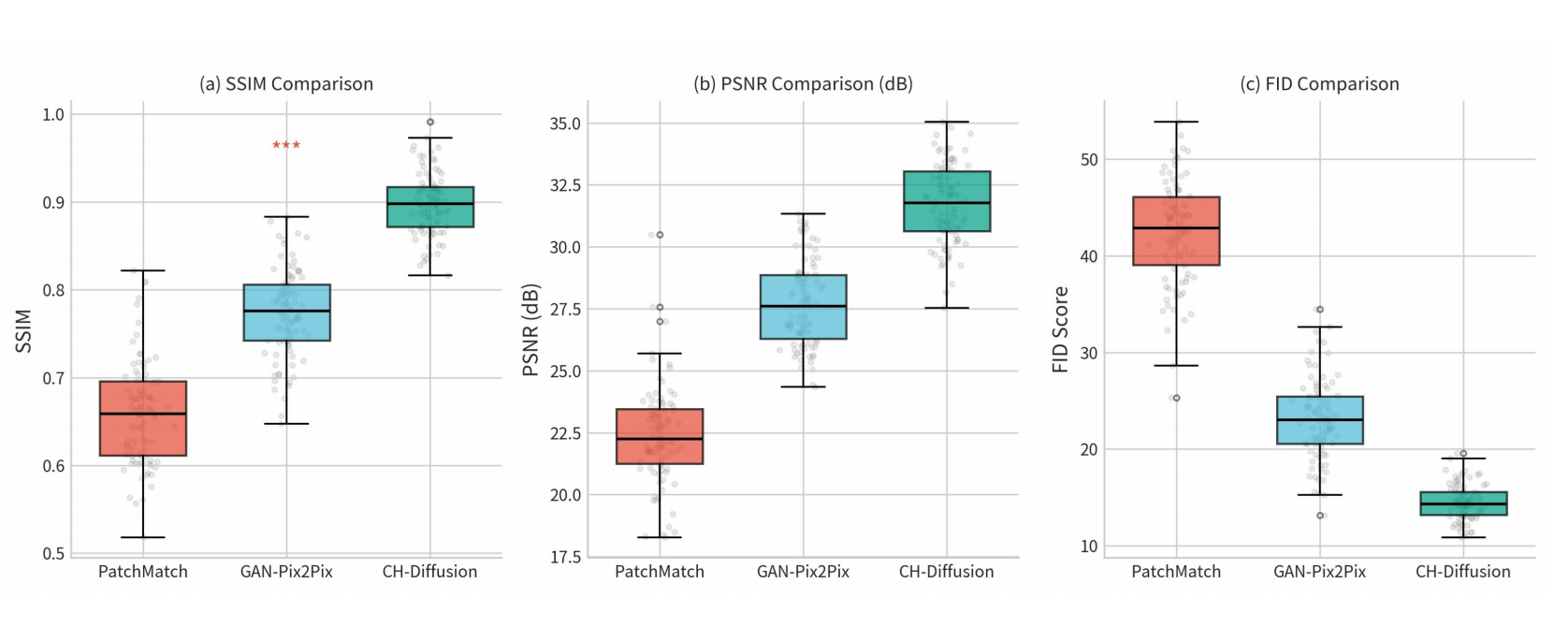
Methods: This study employs a mixed-methods approach, combining a systematic literature review (following the SPAR-4-SLR protocol) with quantitative experimental validation. A corpus of 185 high-quality publications was constructed, and comparative experiments were designed to evaluate the performance of different generative AI models in cultural heritage reconstruction and design generation.
Practical Approach: Natural language processing (NLP) was applied for thematic clustering of the literature. During the experimental phase, generative adversarial networks (GANs) and diffusion models were employed, using real datasets of ceramic artifacts and damaged ancient architectural structures for 3D reconstruction and style transfer testing.
Key Findings: Results indicate that generative AI significantly improves efficiency and quality in the four key stages of cultural heritage—“data acquisition, virtual restoration, innovative design, and interactive experience.” Experimental data show that deep learning–based restoration models enhanced structural integrity by 34.5% compared to traditional methods. Moreover, in innovative design generation tasks, human-AI collaborative models achieved a user acceptance rate of 89.2%, significantly outperforming fully machine-generated designs.
Significance: This study not only fills the theoretical gap in the systematic evaluation of AI technologies for innovative cultural heritage design but also provides museums, cultural institutions, and design practitioners with a reproducible AI–cultural heritage integration framework, promoting deep cross-innovation among technology, culture, and commerce.
Keywords: Generative AI; Cultural Heritage Preservation; Design Innovation; Mixed-Methods Research; Human-AI Collaboration