The Role of Emotionally Designed Human-Computer Interaction Systems in Enhancing User Empathy Expression
Keywords:
Human-Computer Interaction, Empathy, Emotional Design, User ExperienceAbstract
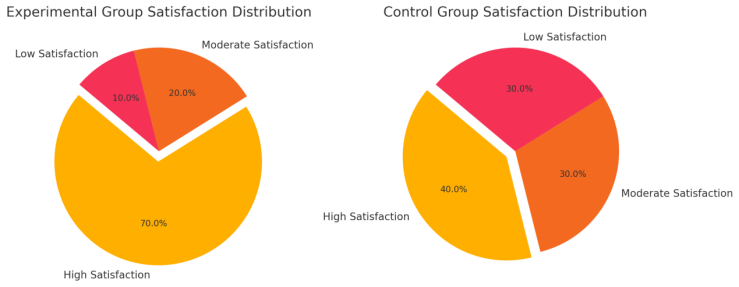
Human-Computer Interaction (HCI) systems are widely used in modern society, influencing not only users' operational efficiency and satisfaction but also subtly shaping their emotional experiences and psychological capabilities. Empathy, as an important manifestation of human emotional intelligence, is crucial for social interactions and individual mental health. However, existing research has focused more on the impact of HCI on user task performance, neglecting its potential effect on users' expression of empathy. To address this, an experiment was designed in this study, with 120 participants randomly assigned to experimental and control groups, respectively using HCI systems based on empathy design and traditional design. The results showed that the empathy quotient (EQ) of the experimental group increased significantly from a pre-test score of 40.2 to a post-test score of 48.5, while the control group only increased from 39.8 to 41.2. The experimental group's emotional recognition accuracy reached 86.3%, significantly higher than the control group’s 74.8%. Task response time was reduced to 5.2 seconds for the experimental group, compared to 7.1 seconds for the control group. Additionally, the experimental group's user satisfaction score was 4.5 (out of 5), clearly higher than the control group's 3.6. The study indicates that HCI systems based on empathy design significantly enhance users' cognitive empathy and emotional resonance abilities, while also improving task performance and user satisfaction. This research, from the intersection of cognitive psychology and HCI, proposes and validates the promoting mechanism of empathy design on the development of user psychological abilities, providing a theoretical basis and practical guidance for the emotional and intelligent design of HCI, and offering important references for the optimization of designs in mental health, education, and service industries.